
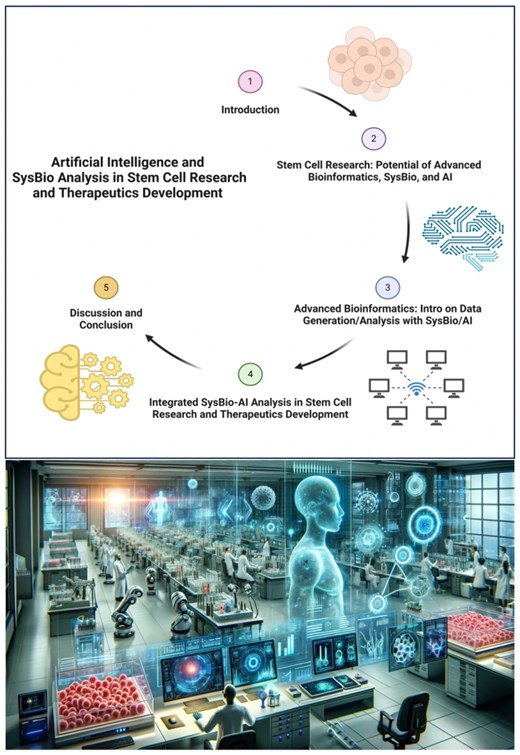
By Stem Cells Translational Medicine –
Background: Stem cell research has rapidly advanced during the past decades, but the translation into approved clinical products is still lagging behind. Multiple barriers to effective clinical translation exist. We hypothesize that an ineffective use of the existing wealth of data from both product development and clinical trials is a crucial barrier that hampers effective clinical implementation of stem cell therapies. Methods and Results: Here, we summarize the contribution of systems biology (SysBio) and artificial intelligence (AI) in stem cell research and therapy development, to better understand and overcome these barriers to effective clinical translation. Advancements in cell product profiling technology, clinical trial design, and adjunct clinical monitoring, offer new opportunities for a more integrated understanding of both, product and patient performance. Synergy of SysBioAI analysis is boosting a more rapid, integrated, and informative analysis of large‑scale multi‑omics data sets of patient and clinical trial outcomes, thus enabling the “Iterative Circle of Refined Clinical Translation”. This SysBioAI‑supported concept can assist more effective development and clinical use of stem cell therapeutics through iterative adaptation cycles. This includes product‑ and patient‑centered clinical safety and efficacy/potency evaluation through paired identification of suitable biomarkers of clinical response.Conclusion: Integrated SysBioAI-use is a powerful tool to optimize the design and outcomes of clinical trials by identifying patient-specific responses, contributing to enhanced treatment safety and efficacy, and to spur new patient-centric and adaptable next-generation deep-medicine approaches.